


HOW THE VIEWING DECK IS USED
Overview
The Viewing Deck is designed to meet teams at different levels of readiness.
Some people want to explore perspective informally. Others want to facilitate a thoughtful group experience. Some organizations want to build internal capability to lead this work themselves.
Rather than offering one way to engage, the Viewing Deck is structured as an ecosystem that supports each of these paths.
Start by Exploring
.webp)
For individuals and teams who want to explore perspective through play.
In this mode, the deck is used informally to spark reflection, surface assumptions, and open up conversation. There’s no expectation to facilitate deeply or manage group dynamics beyond basic participation.
This is often where people begin.
Best for:
- Small teams
- First-time users
- Informal reflection and dialogue
Facilitate Thoughtfully
For leaders ready to guide a structured, in-person session.
When multiple tables are playing at once, or when conversations touch on identity and impact, structure matters. Facilitation Essentials provides the guidance and reflection tools needed to hold the experience responsibly without turning it into a scripted exercise.
This level introduces:
- A Team Leader Facilitation Guide
- Player Workbooks for private reflection
- A clear session flow designed for distributed facilitation
This is where the role shifts from participant to facilitator.
Best for:
- Team leaders
- Internal facilitators
- Small-group, in-person sessions
Build Internal Capability
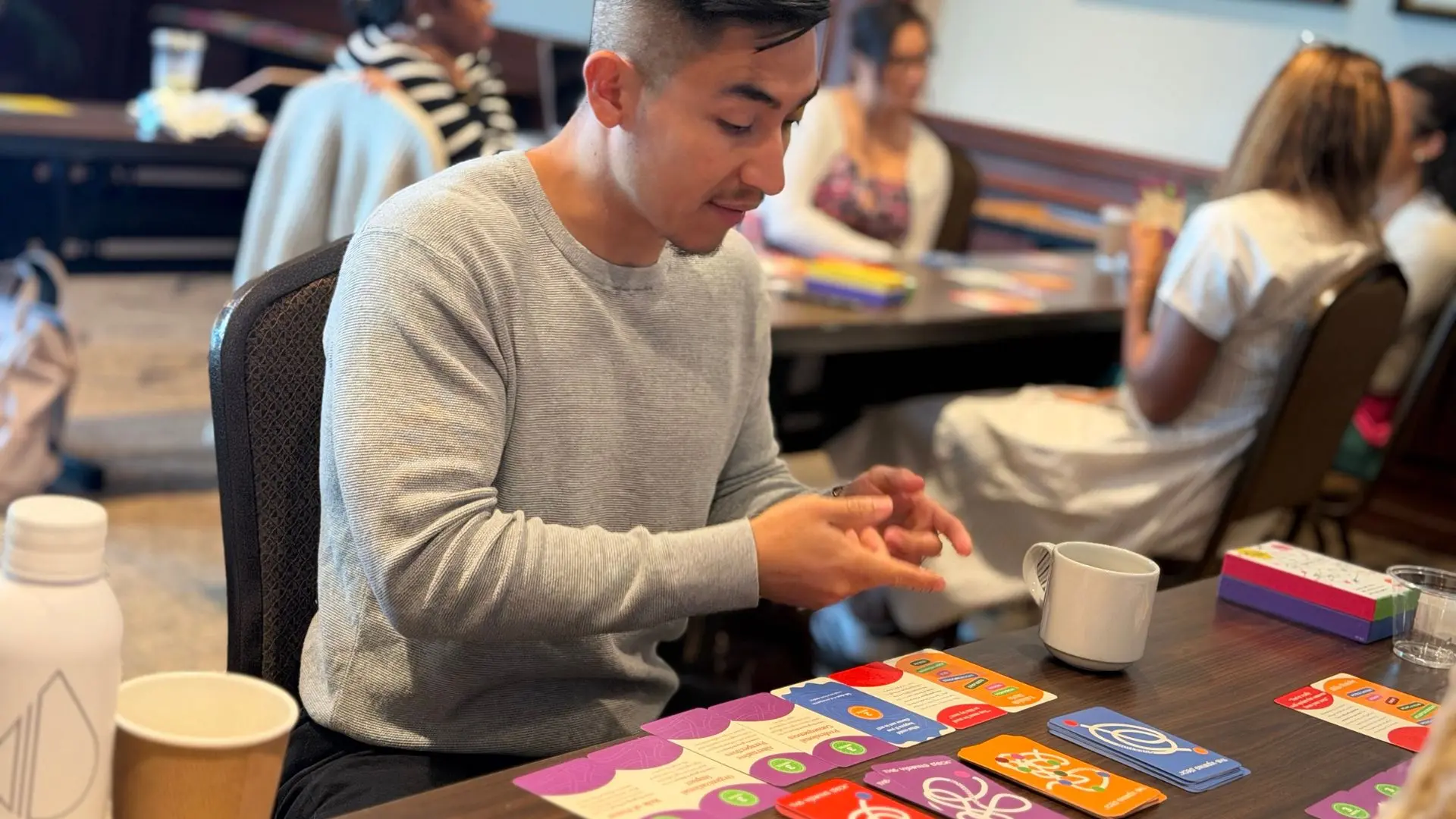
For organizations that want to lead this work themselves – well.
Perspective in Practice™ is a cohort-based experience that prepares both Team Leaders and Team Members before an in-person, Team Leader–led Viewing Deck session.
Through a short CLU Academy course, role-specific preparation, physical materials, and a facilitation readiness checkpoint with CLU, teams build the confidence and judgment needed to hold these conversations over time.
Best for:
- Organizations reducing reliance on external facilitation
- Leadership and culture initiatives
- Teams seeking repeatable, values-aligned practice
Choosing the Right Path
You don’t need to do everything at once.
- Organizations reducing reliance on external facilitation
- Leadership and culture initiatives
- Teams seeking repeatable, values-aligned practice
Each path stands on its own. Each makes the next step clearer when you’re ready.
Perspective doesn’t change people overnight.
But practicing how we see changes what becomes possible.
